services
Manual Therapies
Manual therapy of the foot and ankle refers to a group of hands-on treatment techniques used by podiatrists to reduce pain, improve joint mobility, optimise tissue function, and restore movement.
What does it include?
Manual therapy typically involves:
1️⃣ Joint Techniques
- Mobilisation – slow, graded oscillatory movements within or at the limit of joint range
- Manipulation – high-velocity, low-amplitude thrust
- Accessory glide techniques (e.g. posterior talar glide to improve ankle flexion)
2️⃣ Soft Tissue Techniques
- Myofascial release
- Deep tissue massage
- Trigger point therapy
- Instrument-assisted techniques
- Cross-friction massage
Used for:
- Plantar fascia
- Achilles tendon complex
- Intrinsic foot muscles
- Peroneals, tibialis posterior, calf complex
3️⃣ Neurodynamic Techniques
- Nerve gliding techniques (e.g. tibial nerve mobilisation)
- Neural interface techniques
Often used in:
- Tarsal tunnel–type symptoms
- Baxter’s neuritis
- Neural sensitivity contributing to heel pain
4️⃣ Stretching & Assisted Movement
- Assisted calf stretching
- Hallux mobilisation for functional hallux limitus
- Ankle dorsiflexion restoration
What are the goals?
Manual therapy aims to:
- Reduce pain
- Improve joint mobility
- Reduce muscle guarding
- Improve load tolerance
- Restore functional movement patterns
- Facilitate exercise rehabilitation
Importantly, modern understanding suggests much of its effect is neurophysiological (pain modulation and motor control changes), rather than purely mechanical “realignment.”
When is it used?
Common indications include:
- Ankle sprain (acute or chronic)
- Plantar heel pain
- Functional hallux limitus
- Midfoot pain
- Achilles tendinopathy
- Post-immobilisation stiffness
Where does it fit in treatment?
Common indications include:
- An adjunct to active rehabilitation, not a standalone cure.
It is often combined with:
- Strength training
- Load management
- Footwear modification
- Orthoses
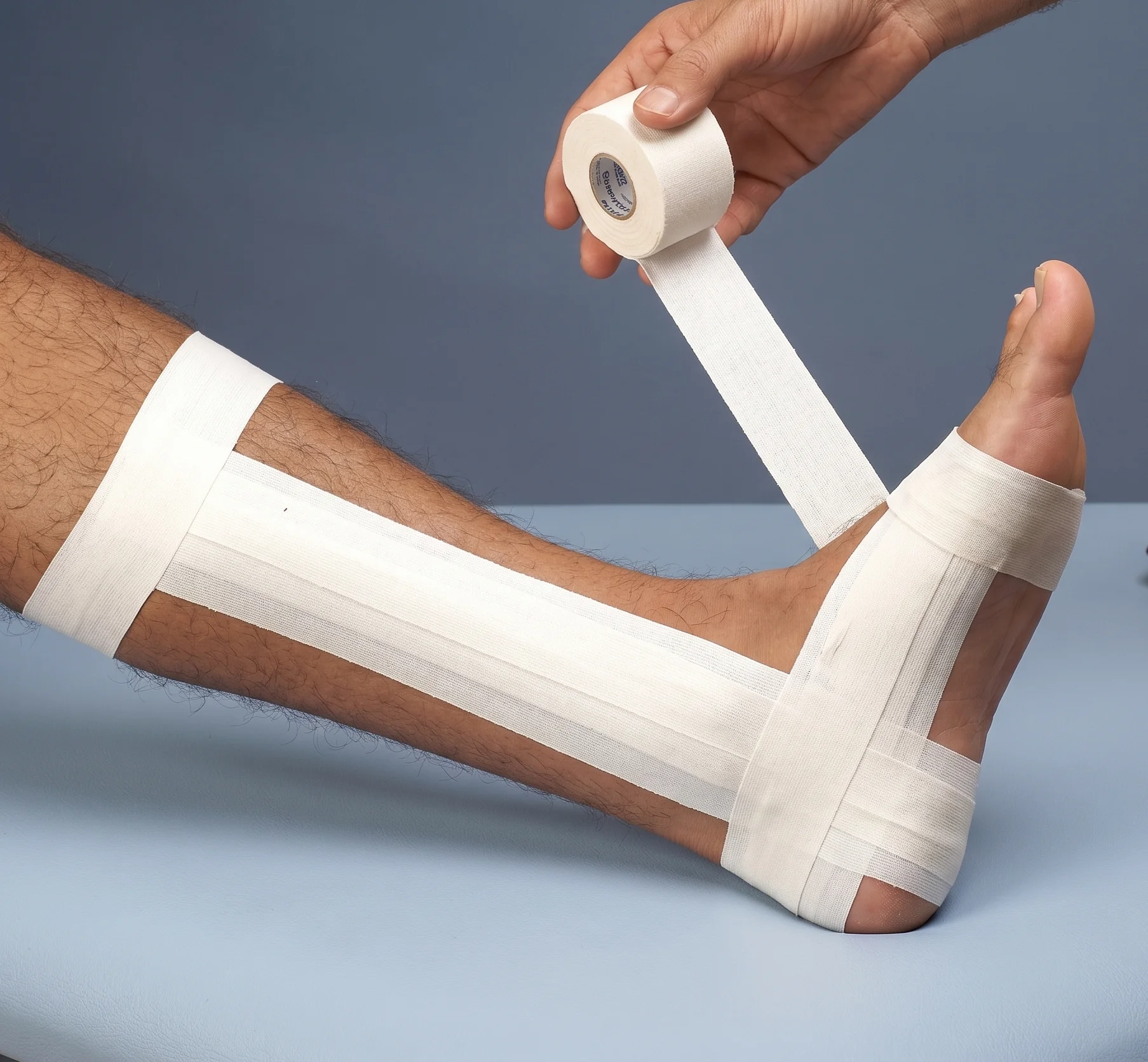
- strapping/taping