services
Manipulation
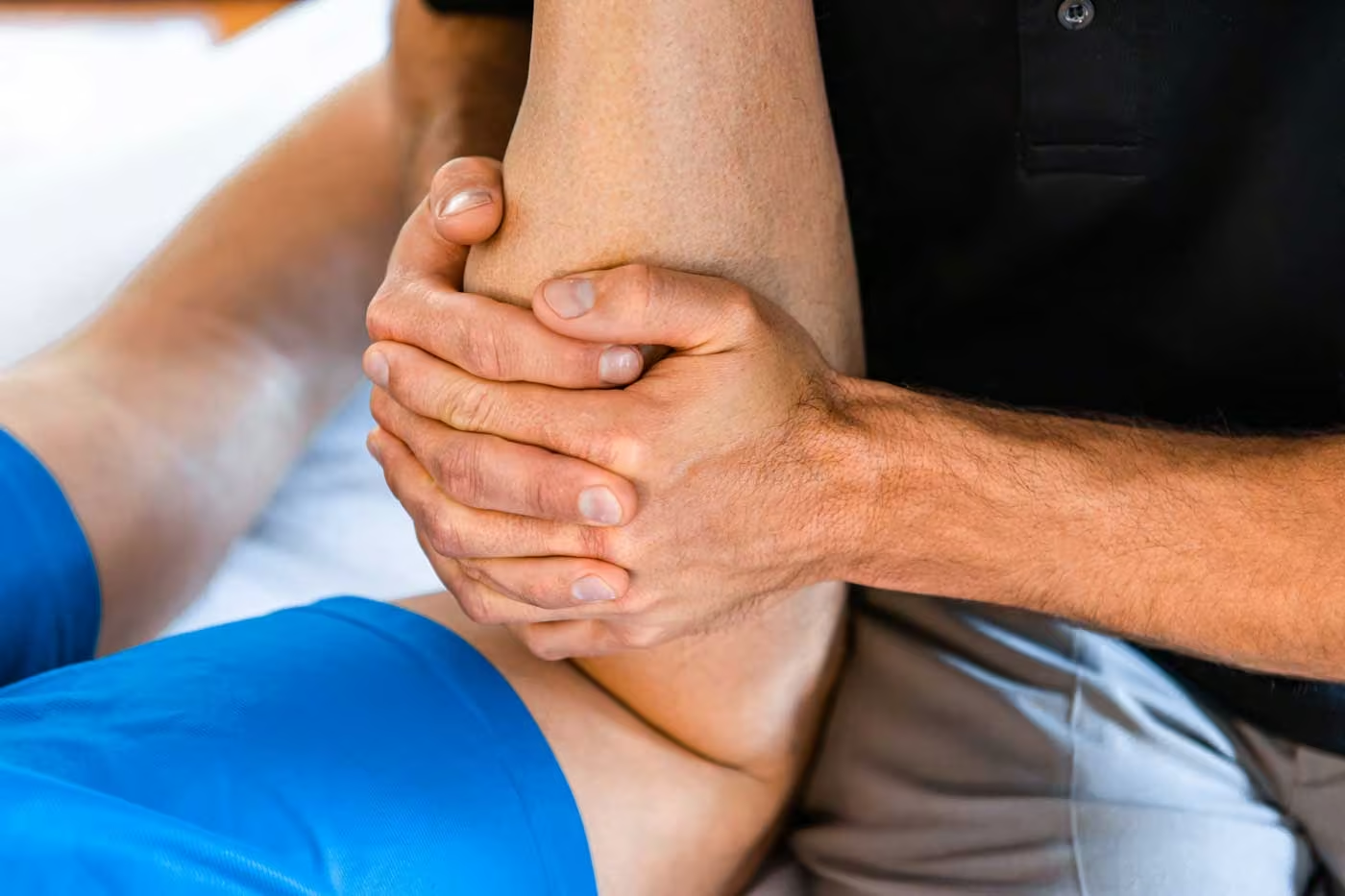
Manipulation of the lower limb is a manual therapy technique in which your podiatrist applies a controlled, high-velocity, low-amplitude (HVLA) thrust to a specific joint. The aim is to restore joint motion, reduce pain, and improve function.
What actually happens?
Your podiatrist will:
- Assess joint movement and identify restriction or dysfunction.
- Position the joint in a specific way.
- Deliver a quick, precise thrust within the joint’s anatomical range.
You may hear or feel a “click” or “pop” — this is joint cavitation (gas release within synovial fluid), not bones moving back into place.
Why is it done?
Manipulation may be used for:
- Osteo Arthritis
- Ankle stiffness after sprain
- Chronic ankle instability
- Plantar heel pain
- Midfoot pain
- Restricted joint movement
- Mechanical forefoot pain
How does it work?
There are two main proposed mechanisms:
1️⃣ Mechanical effects
- Improves joint glide
- Breaks minor adhesions
- Restores accessory motion
2️⃣ Neurophysiological effects
- Alters pain perception
- Reduces muscle guarding
- Modulates central nervous system response
Modern evidence suggests the neurophysiological effect is likely more significant than a purely mechanical “realignment.”
Is manipulation the same as mobilisation?
No.
- Mobilisation = slower, repeated oscillatory movements within joint range
- Manipulation = single, quick thrust at end range
Both aim to improve movement and reduce pain, but manipulation uses a higher velocity.
Is it safe?
When performed by a trained clinician following proper assessment, manipulation is considered extremely low risk – it’s one of the safest interventions available within podiatry..
It is typically avoided in cases of:
- Acute fracture
- Severe osteoporosis
- Active inflammatory arthropathy
- Infection
- Suspected malignancy
- Significant vascular compromise